On this page
- What is a Stellar anchor?
- Why the Stellar fiat on-ramp is the hard part
- The anchor SEP standards in plain words
- Cash in, cash out: what a deposit and withdrawal look like
- MoneyGram Access: the biggest cash network on Stellar
- Other anchors and the Stellar Disbursement Platform
- KYC, AML and why anchors ask so many questions
- How to judge a Stellar anchor before you trust it
- Stellar anchors in Asia: what exists and what does not
Stellar anchors are the businesses that connect the Stellar network to ordinary money. An anchor takes a bank transfer or cash, credits an equivalent token (often USDC) to your Stellar account, and does the reverse when you want local currency back. In other words, an anchor is a Stellar fiat on-ramp and off-ramp, usually run by a regulated fintech or financial institution, as the Stellar developer docs describe it.
Every useful payment on Stellar starts and ends with one. The network can move a digital dollar from Seoul to Manila in about five seconds, but without a trusted business at each end that dollar never becomes rent money. This guide explains how anchors work, decodes the SEP standards they share, looks at the biggest real-world network (MoneyGram), and is frank about where Asia stands.
What is a Stellar anchor?
Think of an anchor as a currency exchange counter with a Stellar account. You hand over cash or send a bank transfer in pesos; the anchor checks who you are, holds the money, and sends you the matching amount of a token on Stellar. Later, you or someone you paid sends that token back to an anchor and receives local money in return. The anchor’s promise to redeem is what gives the token its value.
There are two flavours. Some anchors issue their own asset: Novatti’s AUDD (an Australian dollar stablecoin) and Anclap’s ARST (Argentine peso) are examples. Others do not issue anything and simply honour an existing asset, most often Circle’s USDC, by paying it out and taking it back. For users the difference matters mainly for trust: with an issuing anchor, you rely on that company’s reserves; with a USDC-honouring anchor, you rely on Circle for the token and on the anchor only for the cash leg. Our guide to stablecoins on Stellar covers the issuers themselves.

Why the Stellar fiat on-ramp is the hard part
Moving tokens is easy; moving money is regulated. Anyone can issue an asset on Stellar in minutes, but holding customer funds, paying out cash or touching a local bank account requires licences that differ in every country. That is why anchors, not blockchains, decide where Stellar payments actually work. A corridor is only live when there is a licensed on-ramp at the sending end and a licensed off-ramp at the receiving end, with enough liquidity in between.
This is also why Stellar’s ecosystem invests so heavily in standards. If every anchor built its own API, every wallet would need a custom integration for each one, and the network would fragment. The Stellar Ecosystem Proposals, or SEPs, fix that by giving wallets and anchors a shared language. SDF also maintains the open-source Anchor Platform, which it calls the easiest way to deploy a SEP-compatible anchor service.
The anchor SEP standards in plain words
You will see SEP numbers everywhere in anchor documentation. Here is what the important ones do, without the jargon. The full definitions live in SDF’s anchor documentation and the stellar-protocol repository.
| Standard | What it does | In plain words |
|---|---|---|
| SEP-1 | stellar.toml file | The anchor’s public ID card |
| SEP-10 | Web authentication | Prove you own your account |
| SEP-12 | KYC API | Send your ID details once |
| SEP-6 | Programmatic deposit/withdrawal | Wallet does the talking |
| SEP-24 | Hosted deposit/withdrawal | Anchor shows its own form |
| SEP-31 | Cross-border payments | Anchor-to-anchor transfers |
| SEP-38 | Quotes (RFQ) | Firm FX rate before you send |
A typical consumer flow strings several of these together. The wallet reads the anchor’s SEP-1 file to find its services, signs a SEP-10 challenge to prove the user controls the account, and then starts a SEP-24 or SEP-6 deposit or withdrawal. SEP-12 carries identity data where needed, and SEP-38 lets the user lock an exchange rate. SEP-31 is different: it is for businesses, letting a sending anchor pay a receiving anchor directly, so the end customer never needs a Stellar wallet at all. A newer draft, SEP-45, extends web authentication to smart-contract accounts (SEP-45 draft).
Cash in, cash out: what a deposit and withdrawal look like
Here is a SEP-24 withdrawal from the user’s side, the kind you would see when turning USDC into cash.
- Choose the asset and anchorIn your wallet, pick USDC and the cash-out option. The wallet connects to the anchor and authenticates you with SEP-10; you do not share your secret key.
- Complete the anchor's formThe anchor opens its own page inside the wallet. You enter the amount and, the first time, your identity details. The anchor shows its fee and exchange rate.
- Send the tokensThe wallet sends your USDC to the anchor’s account with a memo that links the payment to your request. Settlement takes seconds.
- Collect your moneyThe anchor pays out in local currency, by bank transfer or at a cash location, and marks the transaction complete.
A deposit runs in the opposite direction: you pay the anchor in local money and it sends tokens to your account. One practical wrinkle catches new users: to receive USDC, your account needs a trustline to that asset, which locks 0.5 XLM of reserve. Our Stellar wallet guide explains trustlines and reserves step by step.
MoneyGram Access: the biggest cash network on Stellar
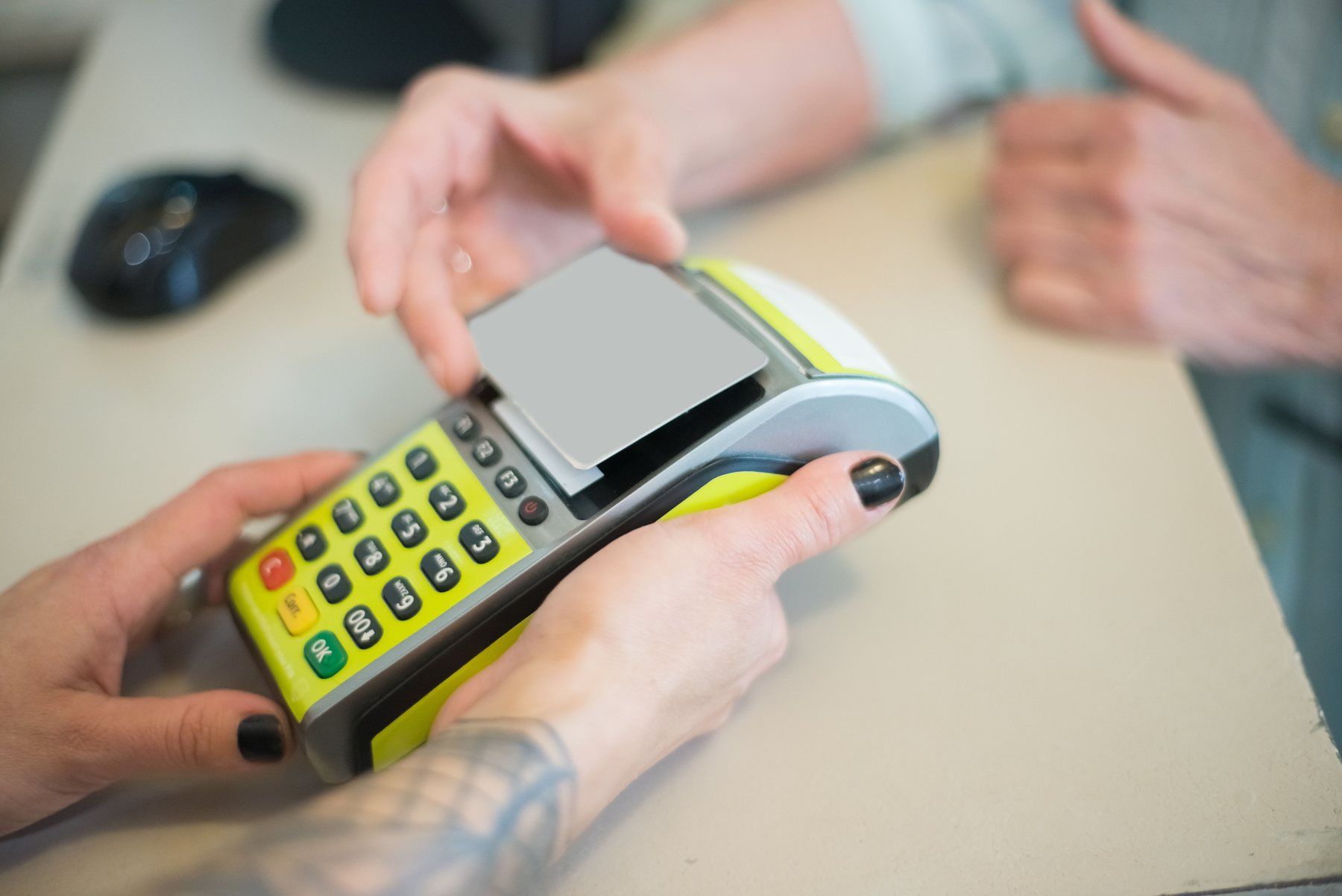
The best-known Stellar cash-in, cash-out service is MoneyGram’s. Announced with SDF in October 2021 and launched in June 2022, it lets users of connected wallets and exchanges deposit and withdraw USDC on Stellar at MoneyGram locations. The first markets included the US, Canada, Kenya and the Philippines (fintechnews.ph). Under the hood it follows the standards above: MoneyGram’s developer documentation tells integrators to implement SEP-10 for authentication and SEP-24 for deposits and withdrawals.
In its three-year review SDF said the service was present in “over 170 countries” and had processed “nearly $30 million” in volume, with the US, Canada, Poland, Ukraine and Colombia among the top countries. Treat those as company figures, and be careful with a common mix-up: MoneyGram’s roughly 500,000 retail locations cover its whole business, not Stellar cash-out points. It also does not use XLM as a bridge; it uses USDC and, since June 2026, its own MGUSD stablecoin. We cover how this fits into remittances on our cross-border payments page.
Other anchors and the Stellar Disbursement Platform
MoneyGram is not alone. Mexico’s Bitso joined the anchor network in July 2023 as a receiving anchor for USDC payouts to Mexico, Argentina and Colombia, implementing SEP-31 and SEP-38 (Bitso docs). ClickPesa runs a ramp in Tanzania, and Anclap serves Argentina. On the issuing side, Novatti’s AUDD went live on Stellar on 1 November 2022 (SDF). SDF keeps a public anchor directory where you can browse listed anchors by asset and country.
The Stellar Disbursement Platform sits next to anchors rather than replacing them. It is an open-source tool for sending bulk payments to recipients’ Stellar wallets, first used for UNHCR aid in Ukraine in December 2022, where recipients could cash out USDC through MoneyGram. SDF reported the programme reached over 1,500 people and disbursed more than $1.1 million in its first year. The pattern is clear: SDP handles the sending, an anchor handles the cash.
KYC, AML and why anchors ask so many questions
An anchor is a financial business, so anti-money-laundering rules apply to it in full. Expect to show an ID document and, depending on the provider and the amount, proof of address or an explanation of where the money comes from. Stellar standardises how this data travels (SEP-9 field names, SEP-12 for submission) so you do not retype it for every service, but the rules themselves come from the anchor’s regulator.
Stellar also gives issuers control tools that matter for compliance. An issuer can require authorisation before an account holds its asset, can revoke that authorisation, and, if it enabled the feature, can claw tokens back. Regulated stablecoin issuers often use some of these powers. For users that is a trade-off: it makes the asset acceptable to regulators, and it means the issuer can freeze your balance.
How to judge a Stellar anchor before you trust it
An anchor holds your money during the cash leg, so it deserves the same scrutiny as any money service. This is our checklist.
- Licences. Look up the company on the regulator’s register in its home country. A logo on a website is not a licence.
- A published stellar.toml. A serious anchor publishes its SEP-1 file on its own domain, naming its assets, issuer accounts and contact details.
- Asset and issuer. Check that the token you receive matches the issuer account and home domain the anchor publishes. Fake tokens with real tickers exist on Stellar.
- Full cost. Compare fees and the exchange rate together, ideally with a firm SEP-38 quote.
- Track record and support. Find out how long it has operated, whether it has a working support channel and what happens if a payout fails.

Stellar anchors in Asia: what exists and what does not
Here we have to be blunt. At our latest check we found no named, live Stellar anchor in Japan, South Korea, Vietnam or Indonesia. SDF’s business team said in early 2026 that it plans anchor networks in Indonesia, the Philippines and Vietnam; those are announced plans, not services you can use today. Anyone claiming live rupiah or dong ramps on Stellar should be able to show a licence and a stellar.toml.
What does exist in the region? The Philippines was among the first markets for MoneyGram’s USDC service in 2022, and Coins.ph has a Stellar Community Fund grant for remittances. Australia has AUDD. Singapore hosts tokenised-fund activity, including Franklin Templeton’s sgBENJI and SDF’s October 2026 investment in Marketnode, but that is investment infrastructure, not a consumer cash ramp. Japan’s GMO-Z.com Trust announced the GYEN yen stablecoin for Stellar in 2022, though its current status is unclear.
In practice, people in Indonesia, Vietnam, South Korea and Japan reach Stellar mainly through exchanges that list XLM and support on-chain withdrawals: licensed local platforms in Indonesia, South Korea and Japan, while in Vietnam, where no exchange had been licensed at our latest check, people rely on offshore platforms and peer-to-peer trades. That works for investors, but each conversion adds a trading fee and spread. Local rules matter too: Vietnam’s central bank still treats crypto as an illegal means of payment, and Korea had not passed its won-stablecoin bill at our latest check. Our regulation and safety guide is a good next stop before moving real money.
Frequently asked questions
What is a Stellar anchor?
A Stellar anchor is a business, usually a regulated financial institution or fintech, that takes in traditional money and credits equivalent tokens on the Stellar network, or redeems those tokens for money. Some anchors issue their own tokens; others hand out an existing asset such as USDC. They are Stellar's on-ramps and off-ramps.
What is the difference between SEP-6 and SEP-24?
Both standardise deposits and withdrawals. With SEP-6 the wallet collects the user's details and talks to the anchor's API directly. With SEP-24 the anchor shows its own web page inside the wallet to collect information, so the wallet does not have to build that form itself.
Can I cash out XLM or USDC through MoneyGram?
MoneyGram's service on Stellar works with USDC, not XLM, and is available through wallets and exchanges that have integrated it. SDF says it has been present in over 170 countries, but availability, limits and fees depend on your country and the app you use, so check inside your wallet first.
Is there a Stellar anchor in Japan, Korea, Vietnam or Indonesia?
At our latest check we found no live Stellar anchor in any of those four countries. SDF has said it plans anchor networks in Indonesia, the Philippines and Vietnam. Until those exist, users there usually move between Stellar and local money through exchanges (licensed local ones where they exist); see our Asia hub.
Why does an anchor ask for my ID?
Anchors handle real money, so anti-money-laundering rules require them to know their customers. Stellar has a standard way to pass this information (SEP-12), but what the anchor asks for is set by its regulator and its own risk policy, not by the network.